
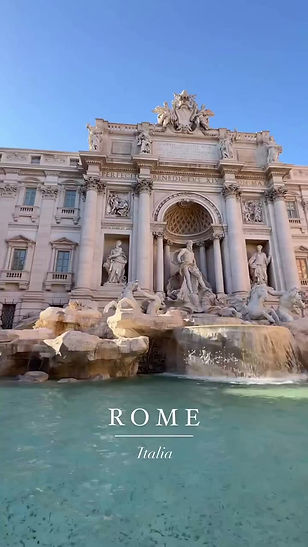
Rome is one of the most visited cities in the world.
It's also one of the easiest to get wrong.
Not because it's complicated, but because most people arrive with a list built from the internet, no booking strategy, and a schedule that would exhaust a professional athlete.
Then they spend two days in queues, one afternoon stuck in traffic between monuments, and leave wondering why they felt so rushed in a city that's supposed to make you slow down.
I've been to Rome more times than I can count.
I know where the crowds go, where they don't, what's worth three hours of your trip and what's worth three minutes, and which neighborhoods actually make sense to stay in depending on what you want to do.
This page is what I'd tell you before you touch the booking sites.
What to book months in advance (non-negotiable)
Rome is one of the few cities where getting the booking strategy wrong costs you entire experiences, not just comfort.
The Vatican Museums and Sistine Chapel Book as soon as your trip is confirmed.
The last-minute option is paying 3x the price for a skip-the-line tour that puts you in a group of 30 people with a guide talking into a microphone. Neither is ideal.
The Colosseum underground tour
The standard Colosseum visit is fine.
The underground tour, which takes you into the hypogeum, the network of tunnels beneath the arena floor where gladiators and animals waited before combat is genuinely extraordinary.
Availability is limited and it sells out weeks in advance. If you want this, it's the first thing you book, not an afterthought.
Bookings open exactly 30 days in advance at 8am Italian time, and slots are gone within minutes. Set a reminder, be online at 8am sharp on the right day, and don't expect a second chance.
Galleria Borghese
Book as soon as your trip is confirmed, or as soon as the 30-day booking window opens on the official site.
Entrance is timed, capped at 360 people per two-hour slot, and frequently booked out 3 to 4 weeks ahead in high season.
This is not a gallery you can decide to visit on a Tuesday morning because the weather changed.
Book it first. It contains some of the most important Baroque sculpture in existence Bernini's Apollo and Daphne, Pluto and Persephone, Aeneas and Anchises, in a villa that is itself a work of art.
It takes two hours. It's worth planning your entire Roman itinerary around it.
Galleria Colonna
One of the finest Baroque palaces in Rome, and one of the least known among non-Italian visitors.
The Colonna family has lived here for over 20 generations.
The gallery, frescoed ceilings, mirrored halls, 270+ paintings, is extraordinary.
The constraint: it's only open Friday mornings (guided tour, by appointment) and Saturday mornings from 9:30am to 1:15pm for self-guided visits. Closed every other day. Book online well in advance, slots fill up 6 weeks ahead on average during peak season. If your trip falls on a Saturday, this is non-negotiable.
Where to stay (and why it matters more than you think)
Rome is a walking city, but only if you're based in the right place.
From the wrong neighborhood, you spend 45 minutes on transport before you even start your day.
The historic center (Navona / Pantheon / Trevi / Via Nazionale)
The most central option.
Everything is walkable: the Vatican is 25 minutes on foot, Trastevere is 15, the Colosseum is 30. Hotels here range from basic to extraordinary.
The tradeoff: it's busy and noisy, particularly on summer evenings.
If the historic center is out of budget, Via Nazionale is a solid compromise.
Well connected, safe, 15 minutes on foot from the center.
Avoid Termini
It's gritty, impersonal, and you'll spend the first and last minutes of every day in a neighborhood that has nothing to do with why you came to Rome.
What most travelers get wrong
Trying to drive.
Rome is not a driving city for visitors. The historic center has ZTL zones (restricted traffic zones) with cameras that trigger automatic fines sent to your home country weeks later. Taxis and public transport work well. Walking works better. A rental car in Rome solves no problem and creates several.
Booking a day trip to Pompeii from Rome.
Pompeii is 2h30 by train from Rome. A day trip means 5 hours of transport for 4 hours on site, exhausted, at pace, in a crowd. If Pompeii matters to you, base yourself in Naples for two nights.
If it doesn't matter enough to do that, skip it and spend the day in Ostia Antica instead.
The neighborhoods worth knowing
Monti
A short walk from the Colosseum. Small streets, wine bars, good restaurants, independent shops. The heart of the neighborhood is Piazza della Madonna dei Monti, worth sitting at any time of day.
Trastevere
The most photogenic neighborhood in Rome, and it earns it. Ocher facades, narrow streets, an exceptional concentration of good addresses.
Come in late afternoon for a drink on a terrace, stay for dinner.
FAQ
How many days do I need in Rome?
Three days minimum to cover the main sites without feeling rushed.
Four to five days to actually experience the city. Less than three days is possible but requires clear priorities.
Is Rome safe?
Yes. Rome is a very safe city for tourists.
The main risk is pickpocketing in crowded areas, particularly on public transport, around the the Trevi fountain, and in Termini station.
Use a phone lanyard and don't leave bags on the back of chairs in restaurants.
Do I need to speak Italian?
No. English is widely spoken in hotels, restaurants, and at tourist sites in the historic center. Learning five words of Italian (buongiorno, grazie, per favore, il conto, scusi) is always appreciated and costs nothing.
What's the difference between your service and booking a guided tour?
A guided tour gives you one fixed experience at a fixed time with a fixed group.
I give you a complete itinerary built around your dates, your pace, and your priorities, which you execute independently.
No group, no compromise.
About
I'm Virginie Marcolungo, founder of Italy Easy Travel.
I design custom itineraries for anyone who wants to actually experience Italy, not just visit it.
I've been traveling to Italy almost every month since 2021.
I have a professional background in tourism and 23 years of senior logistics work.
I know how to build a plan that holds up on the ground, handles the unexpected, and leaves room for the moments you didn't plan.
My fee covers your complete day-by-day itinerary, accommodation recommendations, restaurant suggestions, transport logistics, and an interactive map.
No commissions. No sponsored recommendations. No guesswork.
If you want a trip that actually works in real life, I’ll design it for you.